Every Airline That’s Stripping Down Premium Fares in 2026 (and What Each One Takes Away)
You booked business class. You paid a business class price. So why are you being asked to pay extra to pick your seat? Welcome to the era of basic business class. It is the fastest-growing trend in premium air travel. Yet most travelers don’t fully understand it. Often, they only find out at the airport, locked out of the lounge they assumed came with their ticket.
Here’s the short version. Airlines have taken the “basic economy” playbook and moved it to the front of the plane. So you still get the lie-flat seat and the meal. But the perks that used to come bundled with any business class ticket- lounge access, seat selection, changes, extra bags, full mileage earning— are being pulled out and sold back to you one by one.
This guide breaks down exactly what basic business class means. It also covers which airlines have introduced it, and precisely what each one strips away. As a result, you’ll know what you’re actually buying before you pay.
What Is Basic Business Class?
Basic business class is a lower-priced business fare. It keeps the physical seat and the onboard experience. However, it removes some or all of the surrounding benefits. Airlines brand it in many ways, such as “Business Light,” “Business Basic,” “Business Special,” “Business Value,” and “Base Polaris.”
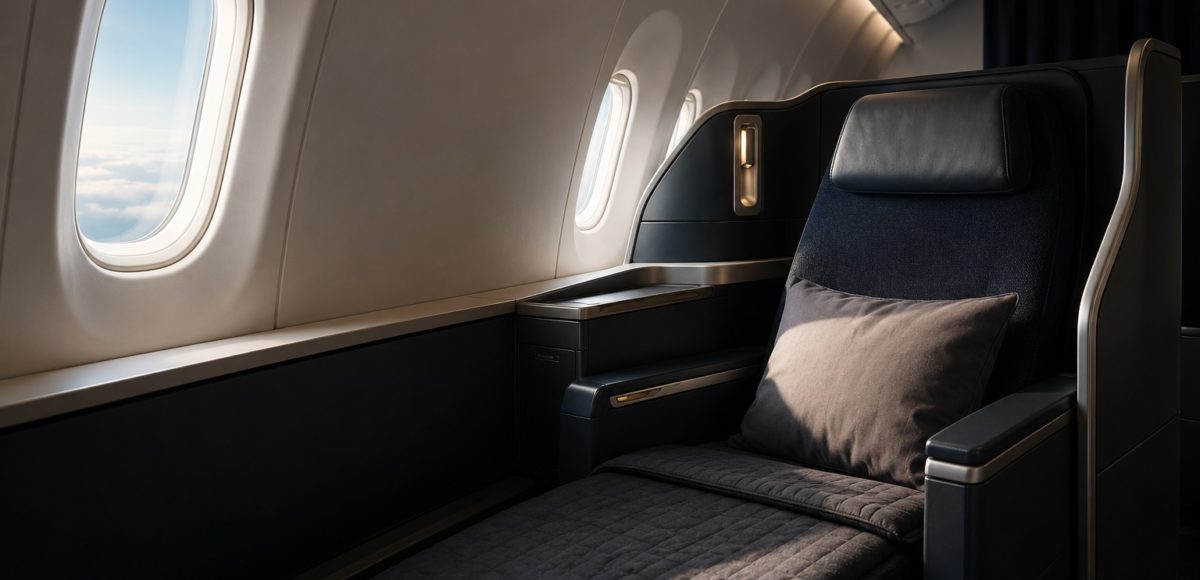
The key thing to understand is this: it is not a smaller seat or a worse cabin. You still get the same lie-flat bed and the same meal. Usually, you get the same priority boarding too. In other words, the word “basic” refers to the fare conditions, not the cabin itself. So two passengers in identical seats, on the same flight, can fly under completely different rules. One has full flexibility and every perk. The other has the seat and little else.
The perks most commonly stripped from a basic business fare include:
- Advance seat selection (often becomes a paid add-on)
- Lounge access (removed entirely on some airlines, kept on others)
- Changes and cancellations (locked, or subject to fees)
- A second checked bag
- Full mileage and status-credit earning
- Upgrade eligibility
- Premium check-in or flagship dining
There’s a catch that industry analysts keep flagging. These fares are frequently not a genuine discount. In many cases, the price that once bought a fully-bundled business ticket now buys the stripped “basic” version. Then, getting back what you already had (seat choice, lounge, flexibility) costs extra on top. So the lower “entry price” for basic business class can be an illusion.
Why Are Airlines Doing This?
There are two reasons, and they reinforce each other.
Premium cabins are now where the money is
First, premium cabins have become the profit engine of the industry. So carriers are dedicating more of each aircraft to premium seating. At Delta, for example, premium seat sales are on track to overtake main-cabin sales. In fact, that shift is arriving ahead of the airline’s own earlier forecast. As a result, when the front of the plane drives the revenue, airlines want to sell it to as many buyers as possible.
Unbundling Captures More Customers
Second, unbundling captures a wider range of customers. It does this without lowering the ceiling. By creating a cheaper entry point, airlines pull in price-sensitive leisure travelers. Otherwise, those travelers might fly premium economy. Meanwhile, corporate and full-fare flyers keep paying for the complete product. It’s the same segmentation logic that reshaped economy a decade ago. Delta’s leadership even described the template as “basic, main, and extra.” Now, that logic applies to every cabin.
The result for travelers is simple. The cabin name no longer answers the whole question. Instead, “business class” has become a starting point you build on, or a stripped-down product you’re upgraded from. It is no longer a single, predictable promise.
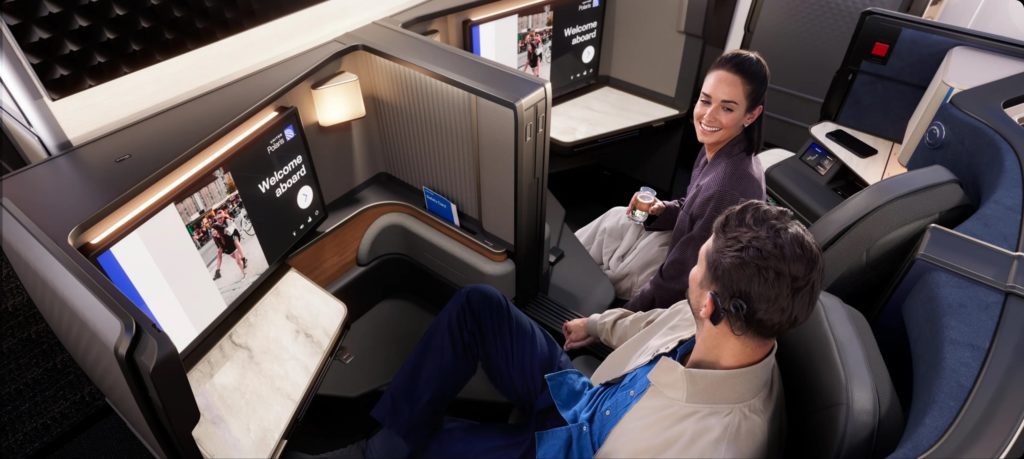
Polaris Studio is not a basic business class – it’s the opposite end of the business class spectrum
The Airlines Offering Basic Business (And Exactly What Each Strips)
North America
United Airlines — “Base Polaris”
United was first to market among the big US carriers. It launched its stripped business fare in April 2026. The airline uses a three-tier structure: Base, Standard, and Flexible. These apply across United Polaris and United Premium Plus. The cheapest Base tier removes seat selection, changes, and other flexibility. However, United’s basic business fare still includes United Club lounge access. So it’s less restrictive than Delta’s version. It’s available on long-haul international, transcontinental US, and select Hawaii routes.
Delta Air Lines — “Basic Business”
Delta began selling Basic fares in its premium cabins on July 8, 2026. The model extends into Delta One, Delta First, and Delta Premium Select. Delta’s entry-level Delta One fare is called Basic Business. It sits alongside Classic and Extra fares. However, Delta’s version is among the most aggressive. The Basic fare has no lounge access at all and no premium check-in. It also removes advance seat assignment and reduces mileage earning. Still, you keep the lie-flat seat and premium dining. In total, Delta now offers 12 fare types, from Main Cabin Basic to Delta One Extra. International Basic Business rolls out further from September 2026.
Air Canada — “Business Class Basic”
This is the newest entrant, launched July 28, 2026. Air Canada’s version is widely considered one of the least punitive. So you keep quite a lot: the lie-flat seat, the onboard meal, priority boarding and baggage, one checked bag, and regular Maple Leaf Lounge access.
However, you give up free advance seat selection, refunds, a second checked bag, and eUpgrades. You also lose access to the flagship Signature Suite dining experience. Meanwhile, existing fares were renamed Standard and Latitude, with Basic sitting below them. It’s available on select routes to the Caribbean, Mexico, Central and South America, plus transatlantic joint-venture flights. One thing to check: some destinations, such as Iran, Israel, and the UAE, were excluded at launch.
American Airlines
As of this writing, American had not announced a comparable basic business product, making it the notable holdout among the three largest US carriers.
Europe
Air France & KLM — “Business Light”
The Air France-KLM group launched Business Light on long-haul routes back in 2023. So they were early movers. The rules broadly mirror those of SkyTeam partner Delta: no free seat selection and no lounge access. In addition, KLM’s version includes only one checked bag, versus two on Standard and Flex tickets.
Lufthansa Group — “Business Light”
Lufthansa Group rolled Business Light across all its subsidiary airlines starting March 2026, on select long-haul routes. That includes Lufthansa, SWISS, Austrian Airlines, Brussels Airlines, and Discover Airlines. However, unlike Delta and Air France, Lufthansa Group’s Business Light tickets generally retain lounge access. That said, the group still restricts certain lounge access depending on the fare and market.
The Gulf and beyond
Emirates — “Business Special”
Emirates pioneered premium unbundling back in 2019. So it’s the veteran here. The discounted Business Special fare strips lounge access and seat selection. Uniquely for Emirates, it also removes the signature complimentary chauffeur-drive service. However, you keep the lie-flat seat.
Etihad — “Business Value”
Etihad launched Business Value in 2025. It’s comparatively generous on baggage, with up to two checked bags depending on destination. However, it charges extra for lounge access and WiFi, and removes the chauffeur service. There’s also one quirk worth knowing. The restrictions can apply when a ticket is reissued. So changing a travel date can strip a benefit the ticket originally included.
Qatar Airways — “Business Lite”
Qatar announced Business Lite in 2020. Basic tickets don’t include lounge access. However, travelers with elite status on Qatar or a oneworld partner can still enter via their status. Either way, you keep the award-winning Qsuite seat.
Basic Business at a glance
| Airline | Fare name | Lounge access? | Notable perks stripped |
|---|---|---|---|
| United | Base Polaris | Kept (United Club) | Seat selection, changes |
| Delta | Basic Business | Removed | Lounge, premium check-in, seat selection, reduced miles |
| Air Canada | Business Class Basic | Kept (Maple Leaf Lounge; not Signature Suite) | Seat selection, refunds, 2nd bag, eUpgrades |
| Air France / KLM | Business Light | Removed | Seat selection, lounge; KLM cuts 2nd bag |
| Lufthansa Group | Business Light | Generally kept | Varies by market; some lounge/flexibility limits |
| Emirates | Business Special | Removed | Lounge, seat selection, chauffeur service |
| Etihad | Business Value | Paid extra | Lounge & WiFi extra, chauffeur service |
| Qatar Airways | Business Lite | Removed (status flyers exempt) | Lounge access |
Fare rules change frequently and vary by route and market. Always confirm the specific fare conditions for your exact flight before booking.
How Elite Status Changes the Equation
If you hold airline elite status, the picture is better than it looks, but not automatically.
The crucial distinction is between status-based perks and fare-based perks. Benefits that come from your frequent-flyer status generally still apply even on a basic business fare. Benefits tied to the fare itself do not.
Take Air Canada’s Business Class Basic as an example. A mid-tier Aeroplan elite member keeps their status-driven benefits. That means complimentary checked bags, priority check-in and boarding, and Maple Leaf Lounge access. Why? Because those flow from status, not the ticket. Full status-credit earning is also retained.
However, two things are still lost on a Basic fare regardless of status. First, eUpgrades cannot be applied to Basic fares at all. Second, complimentary advance seat selection is excluded on Basic fares, even though it’s normally a status perk. So an elite flyer may still have to pay to choose a seat.
In short, status protects your lounge and bags. But it doesn’t restore upgrade eligibility. In some cases, it won’t even restore free seat selection. Therefore, always check your specific program’s rules against the specific fare.
How to Avoid Overpaying for Half a Ticket
The single most useful habit in 2026: read the fare inclusions, not the cabin name.
Before booking any premium fare, check each of these line by line:
- Seat selection — included, or a paid add-on?
- Lounge access — actually included? (Don’t assume. It’s removed entirely on some airlines and kept on others.)
- Changes and cancellations — free, fee’d, or locked?
- Checked bags — one or two?
- Mileage and status-credit earning — full or reduced?
- Upgrade eligibility — can you use upgrade credits on this fare?
- Premium check-in/flagship dining — included or excluded?
Then run the math honestly. On the same route, a “full” business fare on one airline can cost less than a “basic” fare on another. So once you add back seat selection and lounge access, the cheaper headline fare often isn’t cheaper at all.
Finally, consider who you are as a traveler. Some flyers genuinely come out ahead on a basic fare. For example, a solo traveler with elite status, no checked bags, fixed dates, and no need for the lounge isn’t paying for perks they wouldn’t use. However, everyone else should treat the fare name as the beginning of the question, not the answer.
The Bottom Line
Basic business class is not going away. In fact, it’s spreading fast. In under two years, it has gone from an Emirates experiment to a global standard. Today, it touches carriers across North America, Europe, and the Gulf. And more will likely follow.
That’s not automatically bad news. Unbundling can genuinely lower the entry price to a lie-flat seat, at least for travelers who don’t need the extras. However, it only works in your favor if you know what you’re giving up. Meanwhile, the airlines are counting on something. They’re counting on most people seeing the word “business” and assuming the rest comes with it.
But it doesn’t anymore. The seat is the same. The fine print is the entire difference. So read it before you pay. Do that, and basic business class becomes an opportunity instead of a trap.
Planning a premium trip and not sure which fare actually gives you what you want? Comparing business class fare rules across a dozen airlines is genuinely a full-time job. It’s what Skylux Travel does. Reach out, and we’ll help you find the seat and the inclusions that fit your trip. Call us at 888-999-5524 at any time of the day to book your next business class flight.
Related Reading
- 7 Most Private Business Class Seats in 2026 — what the best “seat you keep” actually looks like
- United Polaris Business Class: The Complete 2026 Review
- Qatar Airways Qsuite Business Class: Full 2026 Review
- Lufthansa Allegris Business Class: Everything You Need to Know
- How to Get Cheap Business Class Flights to India in 2026 — finding value on a specific route